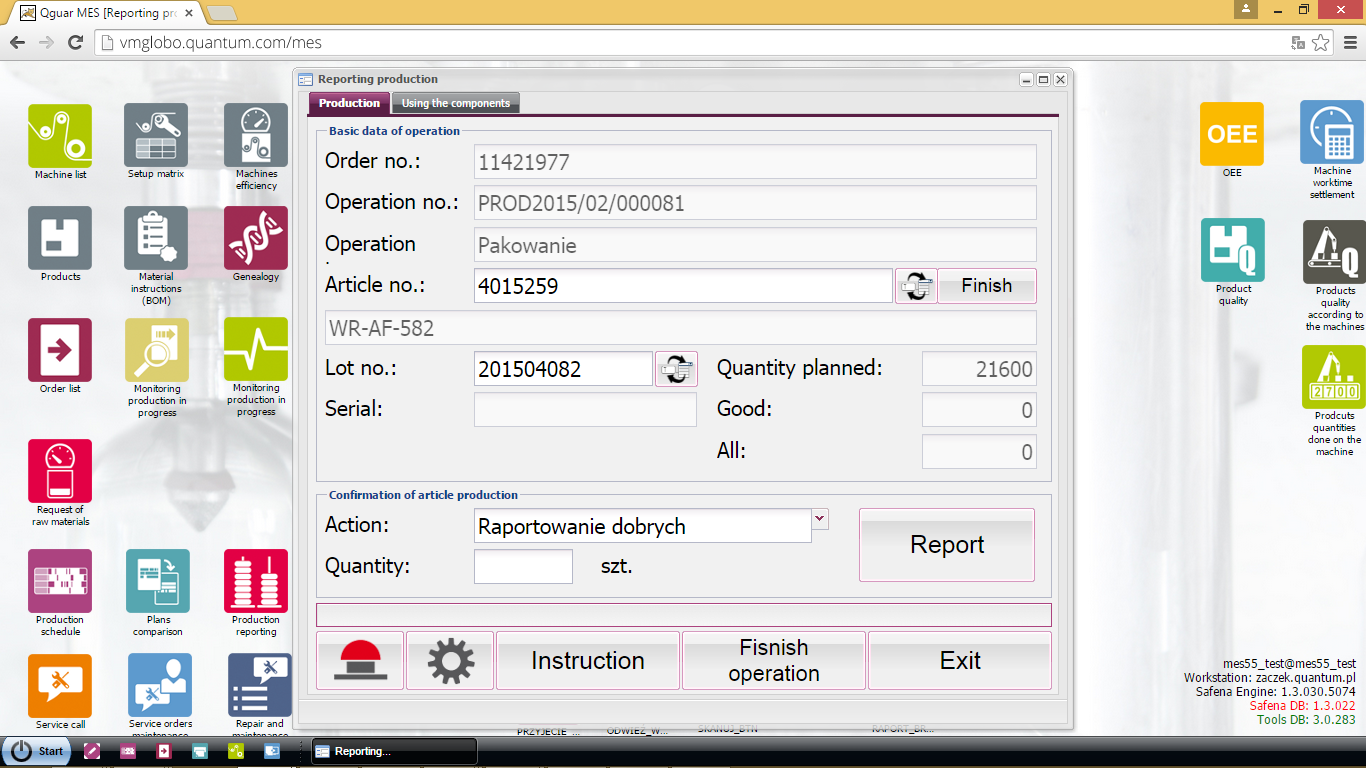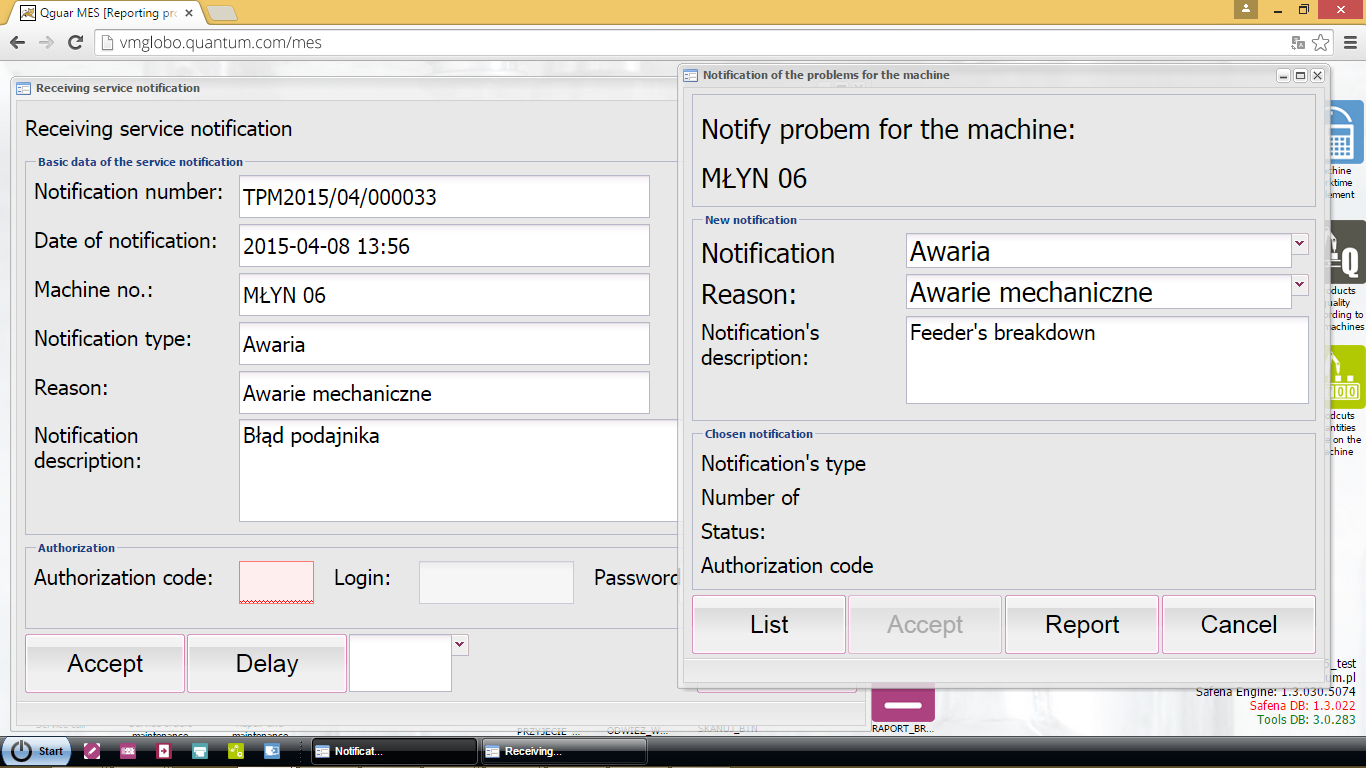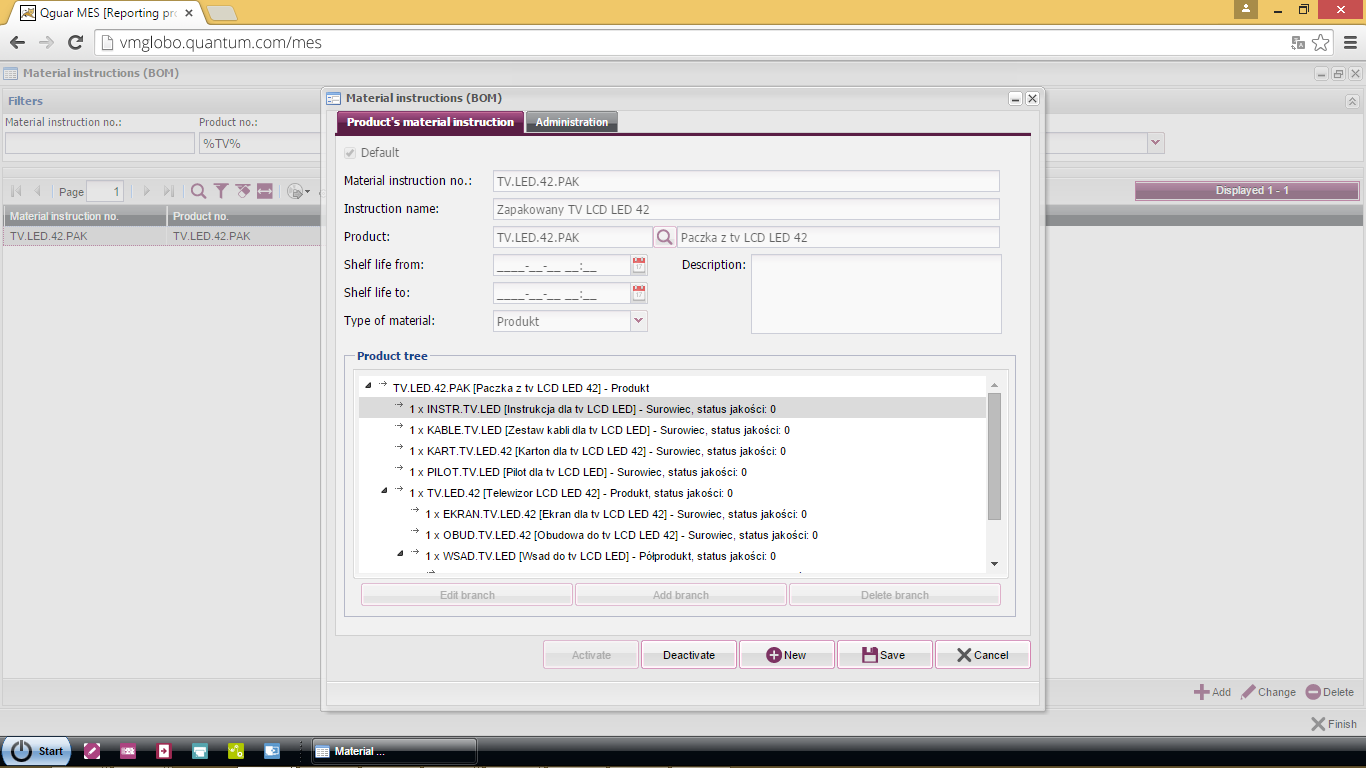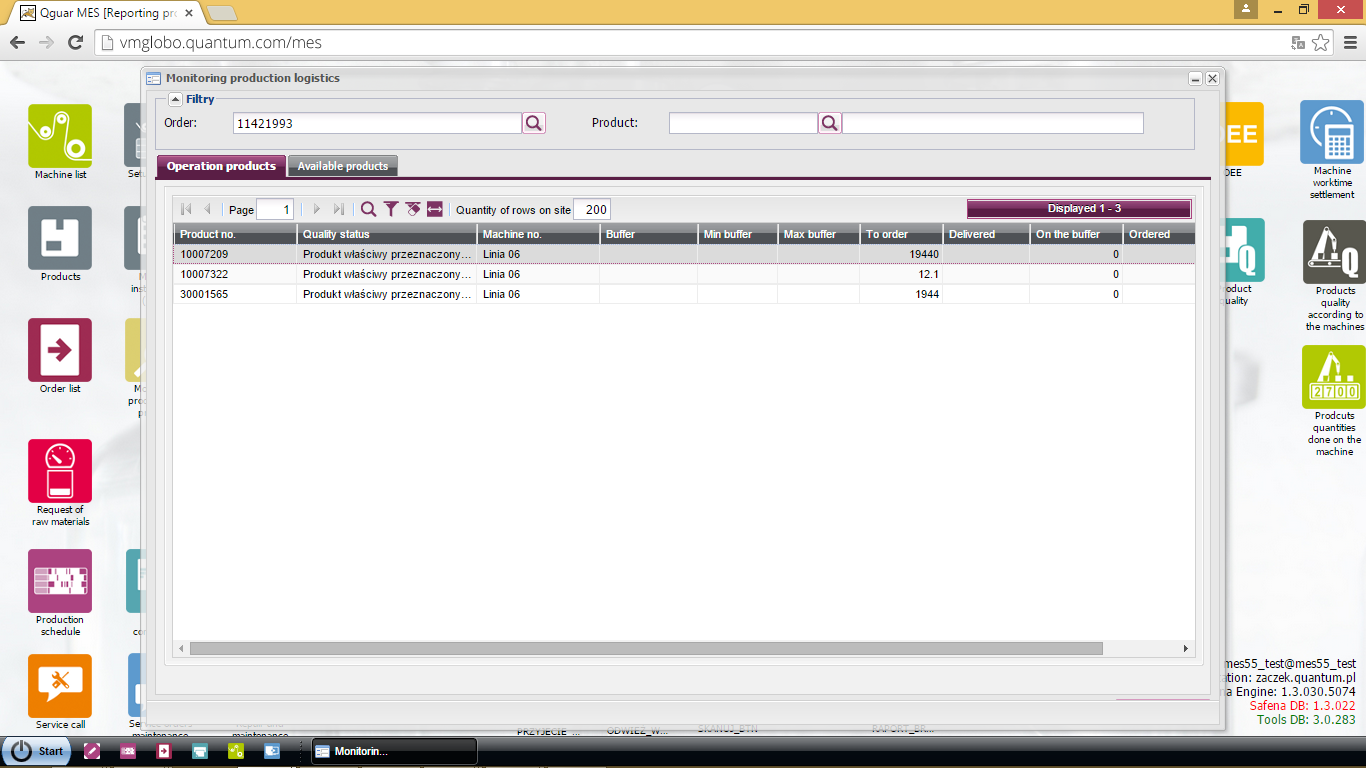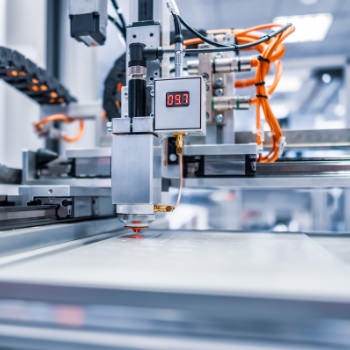
Task delegation and control of production progress in real time.
Qguar MES (Manufacturing Execution System) is a manufacturing execution system that enables the user to model production processes in a fast and effective manner and to monitor the course of their realization. In terms of ANSI/ ISA-95 standard, the MES system operates as an intermediate layer between ICA devices (PLC controllers, IoT sensors, SCADA systems) and business systems (ERP). As opposed to the ERP system, MES collects and processes data in real time, to an accuracy of seconds and single operations. This allows one to synchronize the following three organizational levels: production level (operators, machines), operational level (shift managers, foremen) and management level (production manager, management).
The production management system can:
automatically transmit crucial information between production process participants,
coordinate tasks performed by operators, foremen, planners and specialists from the process maintenance department,
integrate with external systems (ERP, SCADA, logistic systems),
trace products, components and raw materials at every stage of their life within a plant, beginning from order placement through the realization of production processes up to shipment to a consignee.
Information about a production process collected by the MES system supports management based on the principles of “Lean Manufacturing”.
The MES system for production management supports such standards as ISO, HACCP, IFS, SIX SIGMA, among others. It is also a response to the challenges of industry 4.0 and digital transformation of production plants.
The MES program helps a company meet numerous requirements and regulations imposed on industrial branches, where product safety is the highest priority, which includes automotive, cosmetic or food industries.
Qguar MES is a piece of universal software that proves its worth in production plants within a variety of industries. Typical domains of its implementation cover:
This is where MES systems originate from. Production of automobiles and spare parts is subject to the Just-in-Time regime.
In this industry an error may have fatal results, which is why the relevant regulations (such as FDA 21 CFR Part 11) are unforgiving.
What counts here is time (short expiry dates) and consumer safety.
Production of electronic devices involves operations on microscopic elements and great speed of SMT lines.
As in the case of pharmaceutical industry, repeatability of product composition is crucial.
Customizable, automatically generated reports provide a complete overview of events occurring in a production house at different levels of detail. The scope of a report may be adapted to the needs of a particular position, from a shift master to plant manager. This helps one identify bottlenecks and areas that require optimization.
The MES system allows one to effectively supervise production in real time, as it registers progress of operations and notifies about any deviations from the production plan. It allows crucial information to be transmitted between production process participants and coordinates tasks performed by operators, foremen, planners and specialists from the process maintenance department.
The MRO module (CMMS – Computerised Maintenance Management System) supports processing of servicing requests and failure reports, planning of overhauls/inspections and maintenance tasks, manages the stock of spare parts and tools indispensable for production. The module supports servicing logs in terms of planned and realized servicing tasks.
The module supports reporting of pre-planned production operations and consumption of raw materials in real time. It displays production progress in time and in quantitative terms, as well as current delays in the production in progress. This software allows the flow of components and finished products to be registered and traced. Thus, a company may maintain optimum stock for the production in progress. The module provides production reports in different perspectives.
integration with machinery stock via direct integration with machine controllers or via SCADA-type software. The system supports acquisition of data directly from machines, e.g. acquisition of readings of production counters, machine status or process parameters data.
Warehouse operations and management of materials logistics. The module supports operations in the domain of warehousing logistics, both in production and in other processes. The system supports operation via radio terminals equipped with a special application.
The module supports tracing production parameters that impact quality, as well as management of product quality acceptance conditions (AQL). The system allows the user to create customized check lists, supports the sampling process and allows one to attach instructions and documentation. It automatically generates quality reports: SPC, Shewhart control charts.
notification (e-mail, SMS) about various events and conditions, such as, for instance, minimum amount in stock, maintenance-related events or approaching machine overhaul/inspection deadline.
the module allows one to create multi-level bills of materials (BOM). It allows the user to define the full course of a production process, while taking into account interlinks between operations, machines and production work centres, technological process times and retooling times.
Thanks to strict and comprehensive production control, MES software allows one to increase the effectiveness of labour force (registration of performed tasks) and machines (faster reaction to failures and breakdowns). A MES-class system (Manufacturing Execution System) is a program for managing production tasks that allows most processes proceeding in a plant to be realized faster and in a more efficient manner.
Qguar MES is a browser-based system, adapted to operate on mobile devices, such as tablets or smartphones. This allows employees to use the software irrespective of their location at a given moment. It is of special importance for the personnel of the Maintenance Department (among others), whose duties require their high mobility within plant premises.
The web architecture of the system allows for both on-premises implementation (on client’s servers) and for cloud implementation model, while simultaneously ensuring easy scalability. The graphical interface of Qguar MES can be customized to meet individual users’ needs by disabling visibility of selected buttons or their captions.
The time required to implement MES depends on the scale of such a project, the number of plants and departments to be covered by the system and on complexity of production processes. A standard implementation takes from several to over a dozen months. MES implementation stages include:
Efficacy of the production management system (MES) is confirmed, for instance, by investment projects realized at Polish industry leaders’ plants.
Answers to frequently asked questions concerning Qguar MES
Qguar MES can support a wide range of production processes, including other than serial manufacturing.
The BPM notation mechanism included in Qguar MES allows modification of production processes.
Apart from Qguar MES, Quantum offers an APS module integrated with MES to support managers and planners in advanced production scheduling and optimization of production scenarios. Qguar MES can also be integrated with an external APS-class system.
Qguar MES does have a “production history” module, registering detailed information on the raw materials used, machines, samples taken for controls, product features, technical parameters and all the people involved in the process (who and when).
Qguar MES allows the user to attach and then display information for users, at any point of the process (product cards, quality cards, technical parameters, machine settings, etc.). The user can also attach photographs, videos, text files, pdf files and sound files.
Qguar MES does have a functionality to inform the users about a variety of events occurring during production or operation of the system. Every alert can have a pre-defined reaction of the system to the event. Alerts generated by the Qguar MES can be communicated via a wide range of channels such as SMS, e-mail or computer screen messages.
The system offers a detailed inventory of products on the production floor. It registers information on the storage location and exact quantities of all goods in the production facility (raw material, semi-finished product and final product). Integration with the ERP or WMS system is recommended for tracking of product data based on assumptions adopted for warehousing management.
QGUAR MES allows the user to define substitutes of semi-finished products and raw materials by means of BOM options. Products shall be replaced with substitutes of the same functionality, without generation of significant additional costs.
The „Machine performance analysis” module in QGUAR MES allows for monitoring and acquisition/storage of data concerning machine statuses and resources of the production facility. Analysis of the machine operation data logged in the system allow calculation of the productivity and OEE (Overall Equipment Efficiency) indicators and of the production costs (execution of the order).
The system has a tool allowing for reports generation but the user can also export selected information to MS Excel.
In order to support detailed analysis and monitoring of the production process, Qguar MES can interact with a wide range of production equipment, which includes scales, robots, automated production equipment, CNC machining centres, labellers and many others.
Qguar MES is equipped with mechanisms allowing data exchange with other systems implemented by the client, such as ERP- and HMI-class systems.
Qguar MES can use an existing SCADA system components and collect information about machines.
Presence of a SCADA system is not necessary. Qguar MES has other functionalities that enable machine status reporting (HMI).